
UK Education at University
- Sep 21, 2021
- 4 min read
“University and its education can get you lost at times, but here’s a complete guide to your University in the United Kingdom.”
In the UK you can pursue education in mainly two types of educational institutions, the state schools that are fully funded by the government and the private schools which charge a fee to you. All the schools, universities and educational institutions that you will attend in the United Kingdom have high standards of teaching and learning.
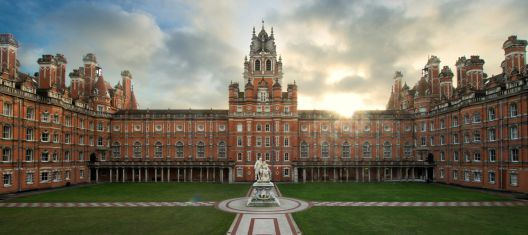
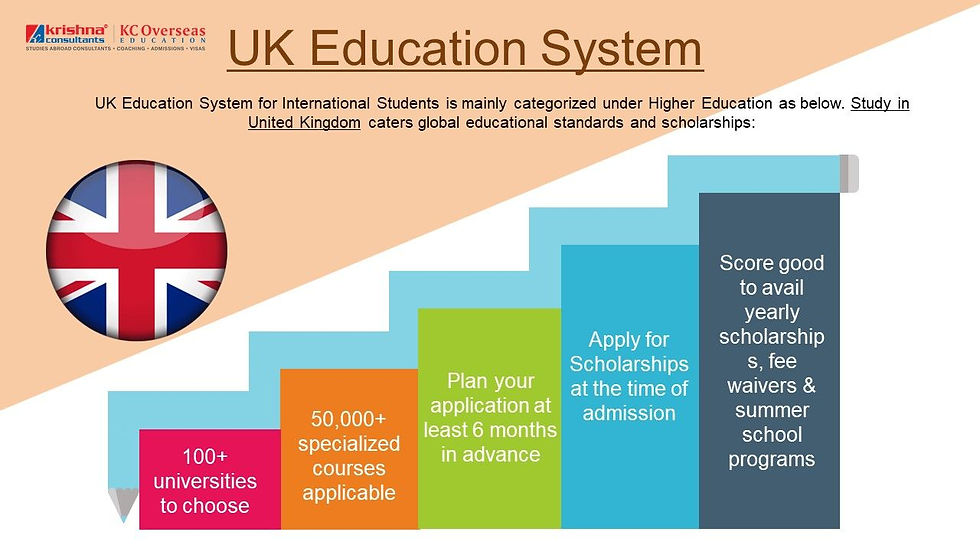
The government introduced a National Curriculum of Education in 1988. This provides a framework for the education system in the UK between the ages of 5 – 18. It is mandatory for all state governed schools to follow this for all early childhood ages that is 5-18. To study in UK, you mainly have three types of educational systems prevalent there- advanced levels, Scottish highers and International Baccalaureate. Higher educational Universities in UK are not owned or run by the state; therefore, you will have to pay tuition fees in those universities there are a diverse range of autonomous and separate universities giving these courses. Higher Educational Institutions in the United Kingdom have the autonomy to design and develop their own programmes of study therefore you will have holistic development studying a diverse array of subjects in one course. You do not have to worry about the quality of education in the United Kingdom because The Quality Assurance Agency (QAA) provides subject benchmark statements to each educational institution explaining the core competencies at honours degree level in a range of disciplines, which are intended to assist those involved in programme design, delivery and review. You have an opportunity in the UK to study in global and international reputed universities the top 10 in United Kingdom being specifically, University of Oxford, University of Cambridge, Imperial College of London, Kings College London and University of Bath and so on. If you’re an Indian student you’re in luck as Indian students were now not an awful lot abled to pursue their better education in the UK but these days these universities have started out awarding scholarships to Indian college students which makes it lower priced to pursue schooling in the UK. In recent times it will be easier for you for making a visa, accommodation has also been smooth these days for foreign students but it confronted a whole lot of difficulty within the last year due to the pandemic that hit badly in the UK and a lockdown was observed in the year 2020 and 2021, 2021 there was improvement some universities have opened and if you’ve taken admission this year maybe you’re already in UK reading this blog or you are preparing to go there because all universities are opening soon. If you want a postgraduate or master’s course in the UK it follows the successful completion of an undergraduate degree, generally lasting for just one year compared to two-year Masters programmes found elsewhere in the world. This means you can save time, money and begin your career much quicker with a highly regarded UK postgraduate degree. Comparing the complete university guide of UK with any other country in the conclusion of this, UK universities are ranked better and have better over all performance making it a more prestigious university for you to study at. One of the main reasons among other being as to why you should study at UK universities is because The UK is a tolerant, multicultural country — in fact, you’ll find people here from almost every country on Earth. In the UK, you can usually complete an undergraduate degree in 3 years if you study full time. A master’s degree usually takes 1 year. This is in contrast to other countries such as the USA, where undergraduate degrees take at least 4 years to complete, and a master’s degree takes 2 years to finish, people graduate faster in UK. UK universities are renowned worldwide therefore whichever nook and corner in this world you are, your degree will be valid. Further if you are planning to study in the UK there are three levels i.e., primary education, secondary education, further education and higher education. If you are a child in the UK you have to legally attend primary and secondary education which runs from about 5 years old until the student is 16 years old. Your higher education in the UK will mostly comprises bachelors, masters and doctoral degrees. As an international student, you may also transition to university level studies via pathway programs that generally include English language courses and foundation courses. Your expenditure on tuition fee in the UK depends on two factors: 1. where you choose to study – different rules and laws apply in England, Northern Ireland, Wales and Scotland 2. you study level – bachelors, masters or doctorate. You can also get financial assistance in the UK in the form of scholarships, bursaries, grants, fellowships, and financial awards. These may be funded by the government, public/private organisations or institutions. The UK Government provides an opportunity for you to study in the country but as a prerequisite, you’ll have to obtain a student visa first. The visa you need will depend on your age and the type of study you wish to pursue in the UK. Grading and exams might also be a bit different from other countries that you are in, and their universities; grades go from ‘First’ (the best grade, equivalent to an A in the US) to a ‘2:1′ or ‘2:2′ to a ‘Third’ which means you’ve passed but gotten the lowest grade. The United Kingdom education system is one of the most eminent in the world. Many countries in the world actually adopted the British school system with minor changes. Some of the British universities are worldwide known for their outstanding quality with particular ones topping the global rankings. There is much more to this but you will explore more once you get there!
Interesting
Great job buddy good research
Good work! Really helpful!!
Wow! Amazing content
Wow!! good job